Skip to content
MegaArrange a pilot
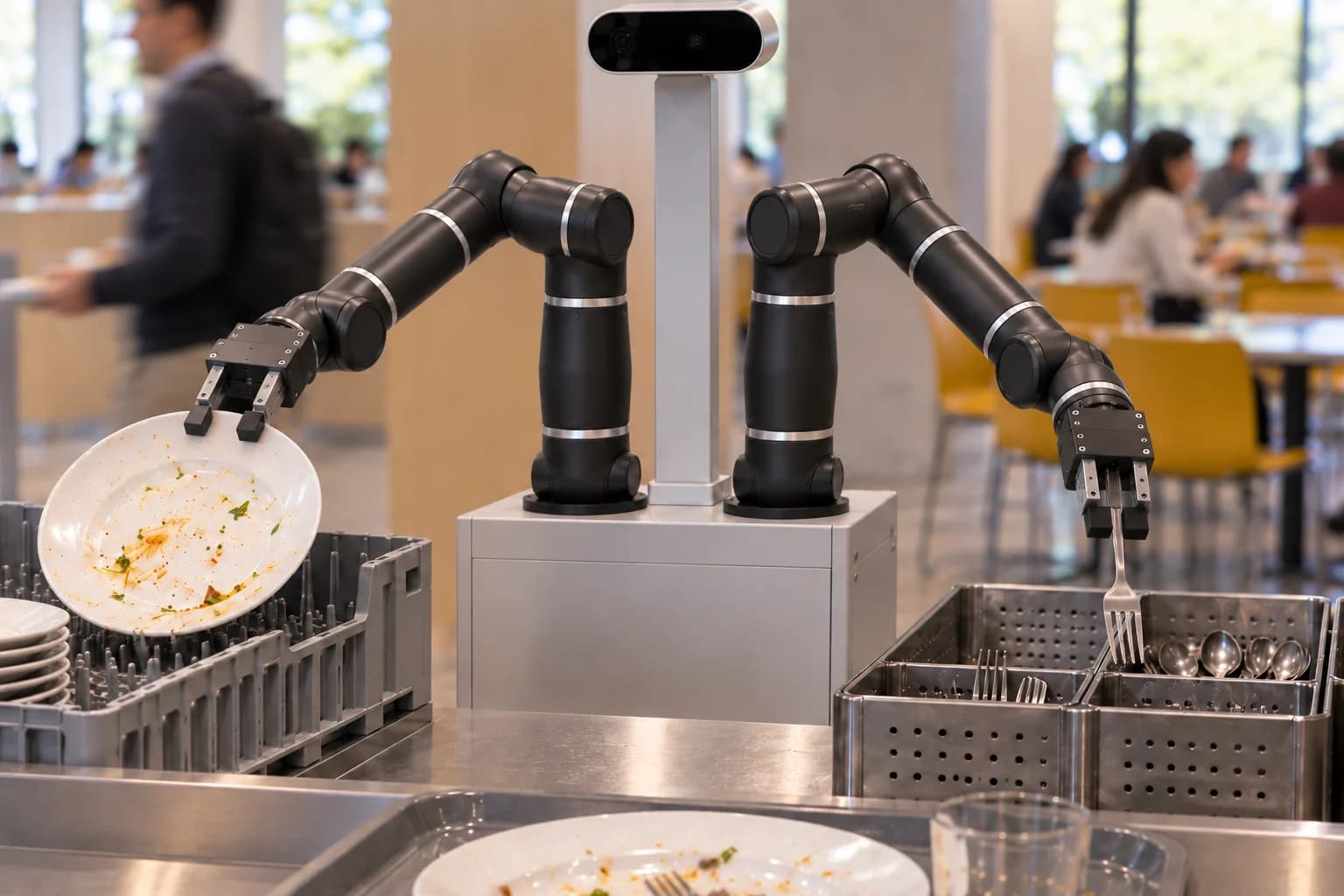
Mega using two robotic arms to sort a plate and cutlery at a dish-return station
Introducing Mega by Griffin Labs

Work around
the clock.

Robotic workcells designed for 24-hour shifts. Configure the arms. Coordinate the cells. Scale the work.

Day shift. Night shift.
Room to scale.

Repetitive work runs across shifts. Mega brings configurable arms, vision and task-specific tools into scalable workcells, designed to coordinate handling throughout a 24-hour operation.

Plan for 24-hour shifts

Extend handling capacity across day and night. The pilot establishes runtime, servicing and operator support for your shift pattern.

Configure each task

Combine single-arm and dual-arm cells, with tools and fixtures matched to the material, movement and output each station needs.

Scale cell by cell

Start at one station. Add cells to share the workload or handle successive tasks, with coordinated workflows and defined handoffs.

Different materials.
The same attention to handling.

From linen handling in laundries to dish sorting in dish rooms, configure each workcell with the tooling and workflow the task needs.

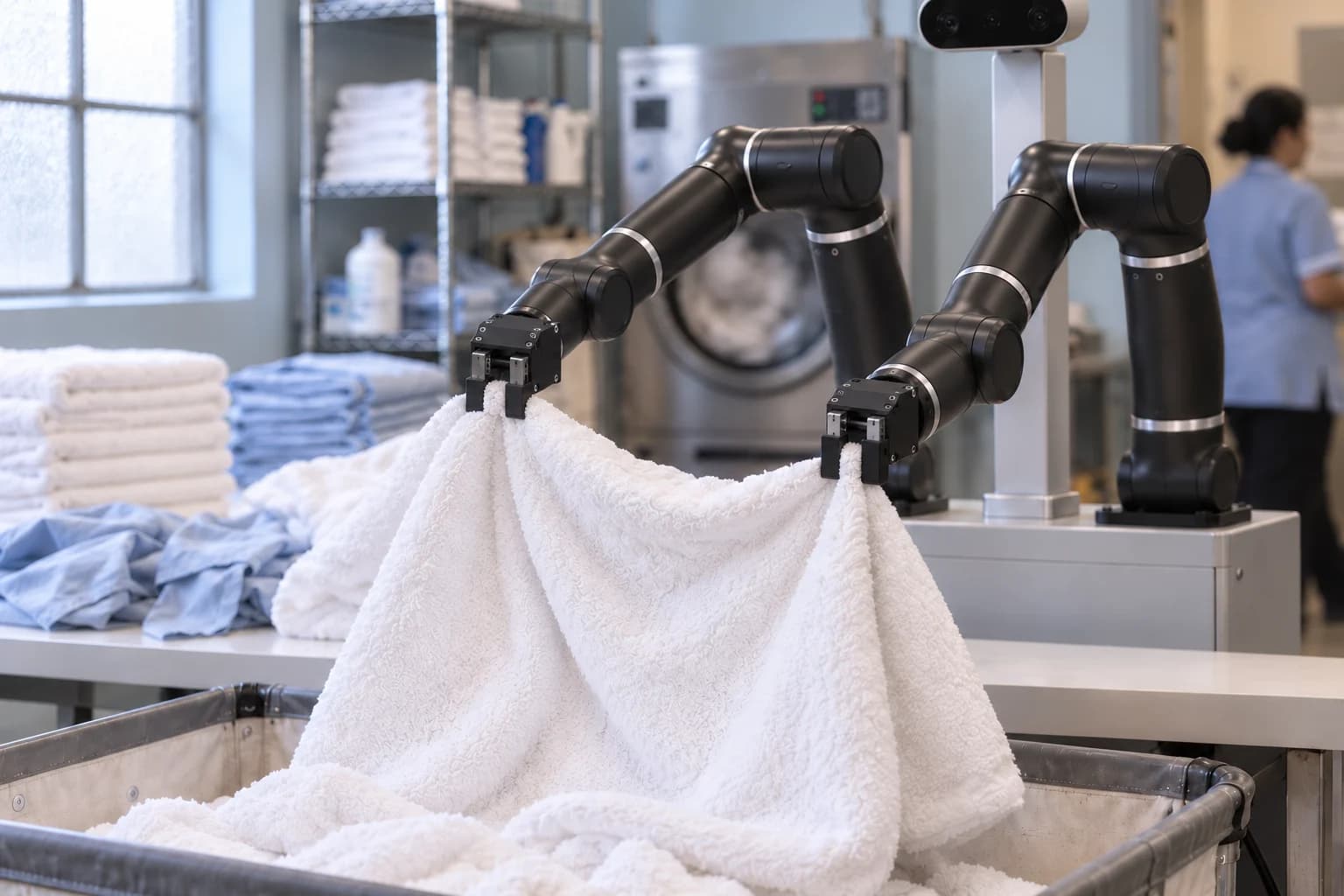
Mega separating a white towel from a laundry cart

Two hands for soft materials.

Separate, orient and transfer towels or linen at a fixed laundry station. Two arms work together on fabric that needs more than a single point of contact.

Setting
Hotel laundries
Task
Separation and feeding
Configuration
Mega Big · two arms
Mega sorting dishes into racks and cutlery into baskets

Every item in its place.

Sort dishes and trays by type into racks at the return or wash station. Configure a single arm for rigid-item sorting, or two arms for two-handed handling and higher-volume workflows.

Setting
Dish rooms and stewarding
Task
Sorting and rack loading
Configuration
Mega Small or Mega Big

The right arms.
The right cells.
One coordinated workflow.

Mix Mega Small and Mega Big within the same operation. Their shared cameras, local compute, software and tool mounts let you configure each cell around its task and plan how the cells work together.

Single-arm system

Mega Small

One arm on a half-width frame. Designed for sorting rigid items into racks where the workflow needs a single grasp at a time.

Dual-arm system

Mega Big

Two arms on a full frame. Designed for fabric separation, feeding and dish or tray handling that needs two hands working together.

Several cells. One workflow.

Arms coordinate within a cell. Cells coordinate across the job. A linen workflow could pair a dual-arm separation cell with a feeding cell, while parallel cells share higher volumes.

  1. Separate

    Two arms pick and orient the linen.

  2. Stage

    A defined buffer holds work for the next cell.

  3. Feed

    The next cell presents linen to downstream equipment.

Vision and coordinated handling
Perception
Wrist and overhead cameras
Processing
Local compute at the workcell
Control
Perception, coordinated manipulation and workflow execution
Tooling and station setup
End-effectors
Interchangeable, task-specific tools
Work area
Fixed frame with standard fixtures and buffers
Site integration
Defined input staging and output collection
Safety and hygiene
Task-specific safety controls and hygiene requirements
Operation and oversight
Staff role
Stage inputs, collect outputs and clear faults
Software
Workflow monitoring and updates
Pilot evaluation
Shift coverage, accepted output, uptime and interventions
Across cells
Workflow sequencing, buffers and handoffs defined for the site

A platform for more
hands-on work.

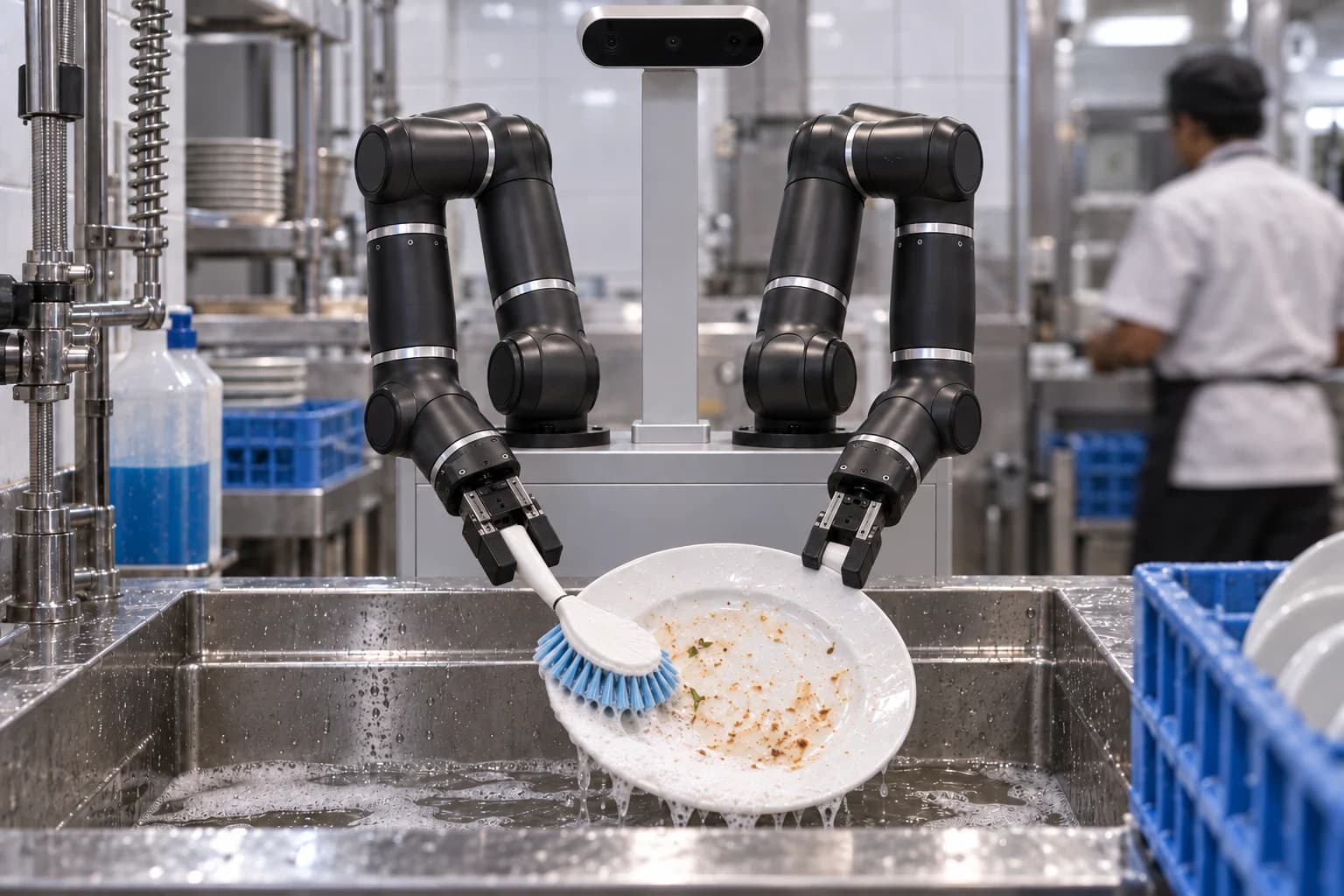
Match the tools to the work. From holding a plate to positioning an ingredient, two arms bring coordinated handling and tool use to the same station.

Mega holding a plate and using a dish brush

Handling meets tool use.

One arm holds an item while the other works on it. Coordinate the grip, tool and movement around the task.

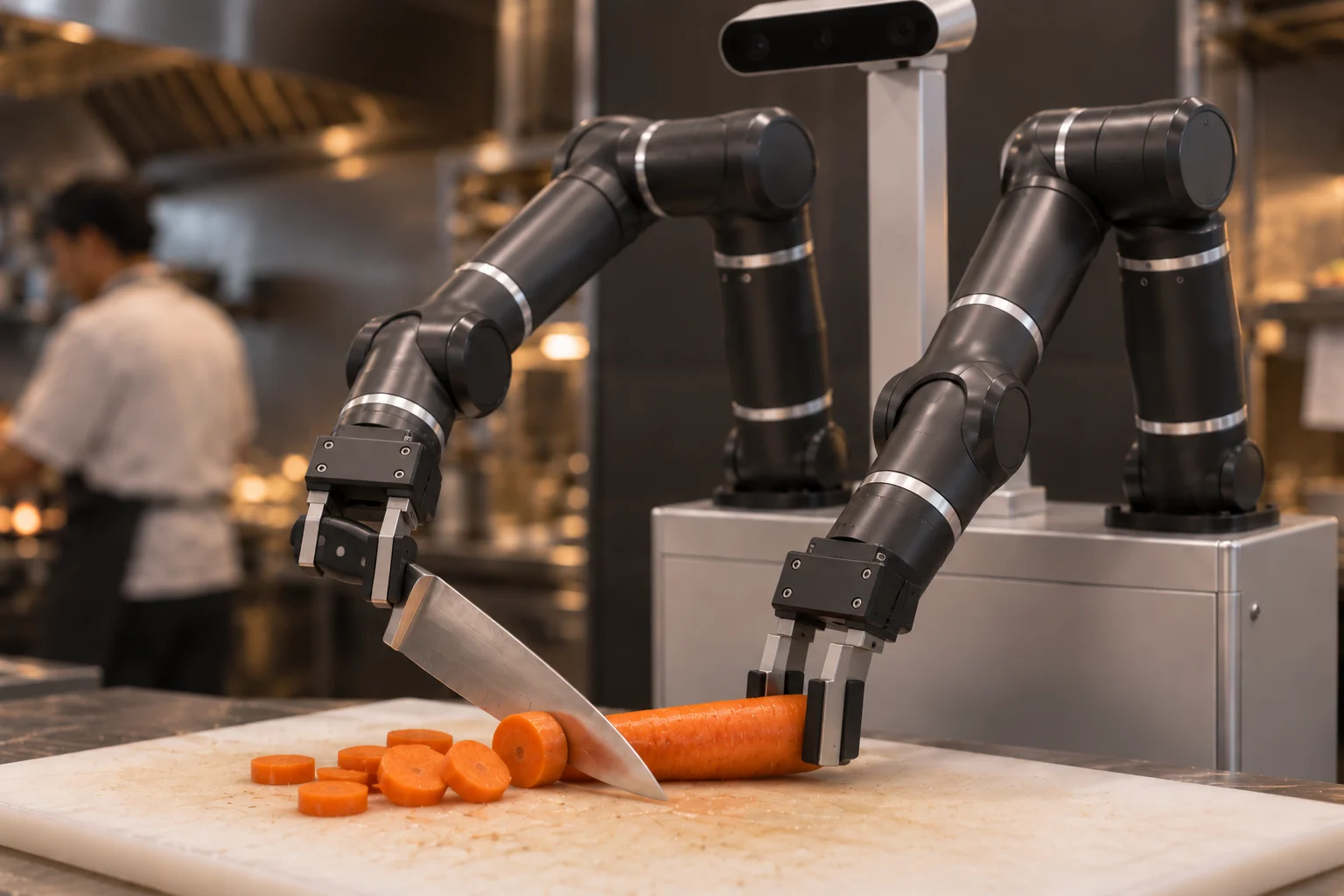
Mega holding a carrot with one arm and a kitchen knife with the other

Another task. A new toolset.

Configure a preparation station around your ingredients, tools and handling sequence.

Start with a cell.
Plan for the whole shift.

Tell us your tasks, shift pattern and required output. We’ll map the arm configurations, workcells and handoffs for a pilot, with a path to scale across your operation.

Arrange a pilot raph@griffinlabs.ai
Mega by Griffin Labs.Back to top
© 2026 Griffin LabsSingapore